Photo of chef Chris Young.

Chris Young

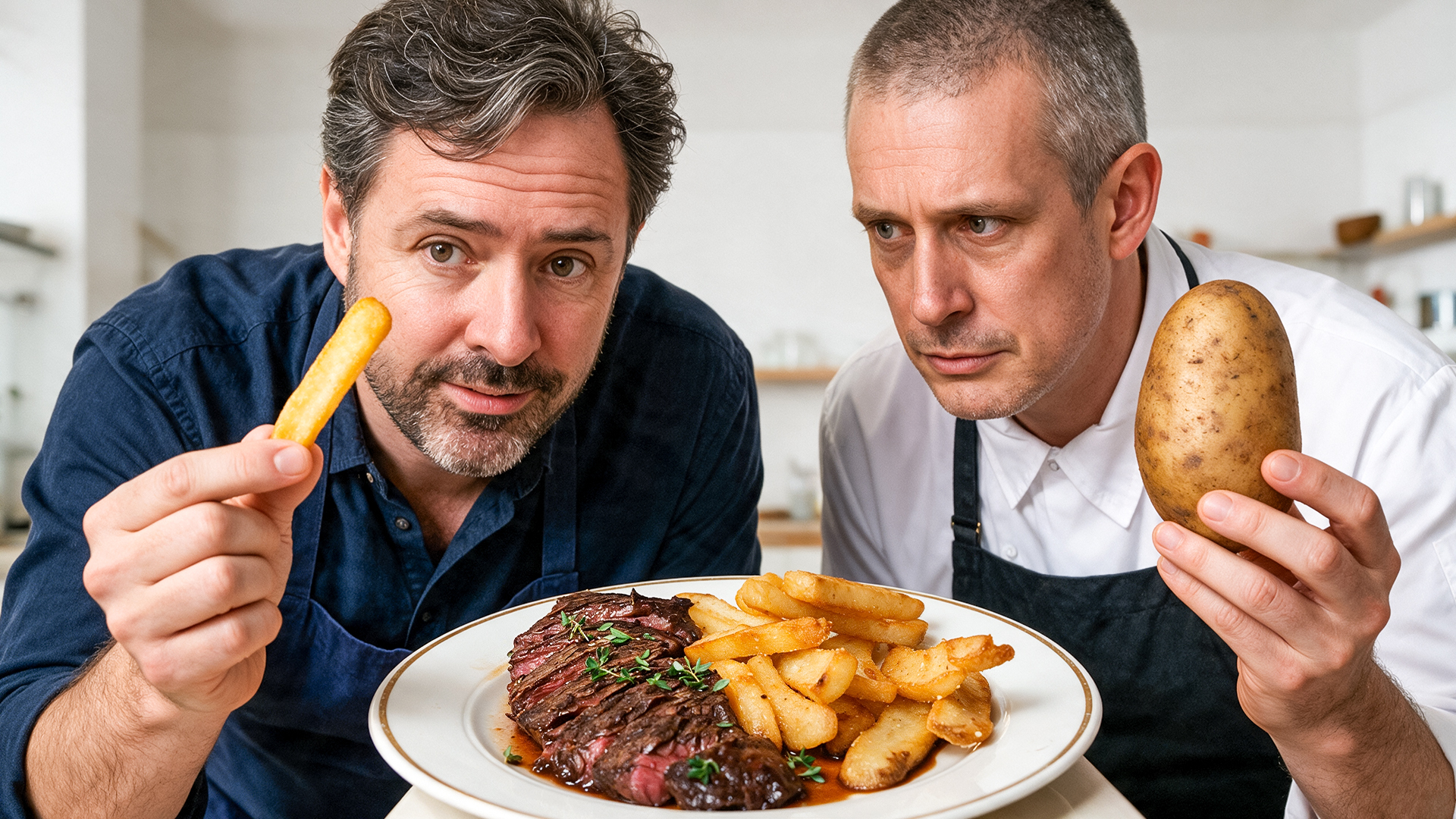
Chris Young and Andy Hearnden with a plate of steak frites; Chris holds a fry and Andy holds a potato.

Better Fries Start in the Freezer

Watch the video with Andy Hearnden

I learned to make Heston’s triple-cooked chips at The Fat Duck by turning them into potato soup. The stove was around the corner from my section, so I’d leave my other prep to check them, find they weren’t ready, then get distracted by something else. When I tried taking them out sooner, Ash came flying round the corner: those weren’t right either.

The surface needed to begin falling apart. Those cracks would become weak spots in a thin crust that shattered when you bit into it; stopping at tender wouldn’t get us there. My rule of thumb was that if I wasn’t losing ten to twenty percent in the blanch, I hadn’t gone far enough. We made more than we needed.

After all that, the potato could still let you down. Too little dry matter leaves a pasty chip without much crust; too much sugar makes it brown too quickly. I want freshly harvested potatoes with about 22% dry matter—the part that isn’t water. At The Fat Duck, we weighed them in air and water, changed varieties with the season, and sometimes took chips off the menu because nothing available was good enough.

I can’t get that information by picking up a supermarket potato. Cold storage can turn starch into sugar, and looking at the skin won’t tell me what’s happened inside. But frozen-fry producers can demand a specification, then sort and test potatoes for dry matter and sugar before blanching and freezing them.

That’s why I started with plain frozen fries for Andy Hearnden. The producers had selected the potatoes; I still had to build the crust. I blanched them further to roughen the surface, cooled them, and put them through the two frying stages. I got the thin, shattering crust and fluffy middle I wanted, and Andy approved.

Triple-cooked chips · Deep-fried steak · Bordelaise

Triple-cooked chips

Prep

15 min

Cook

20 min

Ingredients

Thick-cut frozen French fries
50/50 blend of beef tallow and duck fat
Some strained and aged frying oil (about 5% of the oil)
Salt

Steps

1
Blanch: the frozen fries in simmering water for 1 to 2 minutes, until their surfaces begin to crack.
2
Cool: the hot chips in a refrigerator, which works nearly as well as the vacuum chamber sealer we used at The Fat Duck.
3
Fry: the chips in oil heated to 265 °F (130 °C) until the surface feels rough and leathery, not slick and oily. This typically takes around 10 to 12 minutes. Avoid getting any color on the chips.
4
Store: the chips in the refrigerator for up to 2 days, or freeze them indefinitely.
5
Fry: the chips in oil heated to 400 °F (205 °C) until evenly golden, about 4 to 6 minutes.
6
Strain: the chips into a bowl lined with paper towel. Toss with salt and serve immediately.

Aged frying oil helps fresh oil break in quickly and brown food more evenly.

Deep-fried hanger steak

Serves

2

Prep

5 min

Cook

1 hr

Ingredients

1 hanger steak
Salt
20 g (1½ tbsp) butter
2 garlic cloves, crushed
2 thyme sprigs
50/50 blend of beef tallow and duck fat

Steps

1
Trim: the steak, removing the tough central sinew. Season with 1% salt by weight, then seal in a sous vide bag with the butter, garlic and thyme.
2
Cook sous vide: in a water bath at 125 °F (52 °C) for 45 minutes to 1 hour.
3
Blot: the steak completely dry after removing it from the bag.
4
Fry: the steak in oil heated to 400 °F (205 °C) for 1 to 2 minutes, until deeply and evenly browned.
5
Slice: against the grain without resting. Finish with flaky salt and serve with the chips and bordelaise.

Sauce bordelaise

Serves

2–4

Prep

10 min

Cook

30 min

Ingredients

5 g (1 tsp) neutral cooking oil
8 g (1 tbsp) finely chopped shallots
110 g (4 oz) red wine
1 bay leaf, crumbled
1 thyme sprig
1.5 g (½ tsp) salt
120 g (½ cup) veal demi-glace
15 g (1 tbsp) unsalted butter
25 g (2 tbsp) diced bone marrow

Steps

1
Sweat: the shallots in the oil over medium-low heat until soft but not browned, about 2 to 3 minutes.
2
Reduce: the wine by two-thirds with the bay leaf, thyme and salt.
3
Add: the veal demi-glace, bring to a boil and reduce slightly. Remove from the heat and swirl in the butter.
4
Strain: through a fine sieve.
5
Fold: the marrow into the hot sauce and cook through before serving. If marrow is unavailable, a splash of beef tallow can add a similar flavor profile.